

This week’s #SEOForLunch sponsors are AirOps and North Star Inbound.
There are two questions that come up in at least one meeting per day for every single business.
“How do we get back our Google clicks?”
“How do we show up in all the LLMs?”
The answer to both of these questions is one that very few want to hear. Hold your breath…
Build your brand. Gone are the days of “add some more keywords” and “how many links would it take to…”
Does this mean search-and-answer bots can’t be manipulated? hell no, but the likelihood that these “tactics” will deliver long-term, consistent value is nil.
Thank you to AirOps for sponsoring this week’s #SEOForLunch

What’s New At AirOps - Product Launch
Visibility tools have spent the last year telling marketers where their brands stand in AI search. None of them tells you what to do about it.
Now that changes.
AirOps is the growth platform for AI search. One place to see where you’re cited, ship the work that closes the gaps, and measure what each Play is actually moving. Not a dashboard. Not a writing assistant. The operating system for marketers winning the answer era.
I got an early look at Quill, which the team released last week. It’s been amazing to see users share what they’ve accomplished in just a week.
On May 21 at 3pm ET, they’re going live to walk through what’s new, how it works, and how marketing teams can take their content to the next level.
You’ll hear from VP of Product Amr Shafik, VP of Growth Eoin Clancy, and Manager of AI Solutions Melanie Dell’Olio for a firsthand view into the new systems behind AirOps. They’ll show what agent-driven growth actually looks like, how agents handle execution while humans stay in control, and how to close the gap between AI search visibility and real outcomes.
If you lead SEO, content, or growth, this is the session to block. Move from constant monitoring to focused execution. Turn campaigns into repeatable operating cadences. Improve speed without giving up control.
The recording goes out after. Live room gets the unfiltered version.
Two Sites, Two Brands, Two Value Adds
Ever heard of Crayola? Probably. It is only a little ~$1B company, and the default answer most people think of when someone says crayons.
How about Monday Mandala? It is owned by retired school teacher Inez Stanaway and focuses heavily on coloring pages and printable activities.
Now for the fun question: which one do you think drives more traffic for coloring-related searches?
If you guessed Monday Mandala, you’re right. 🤯
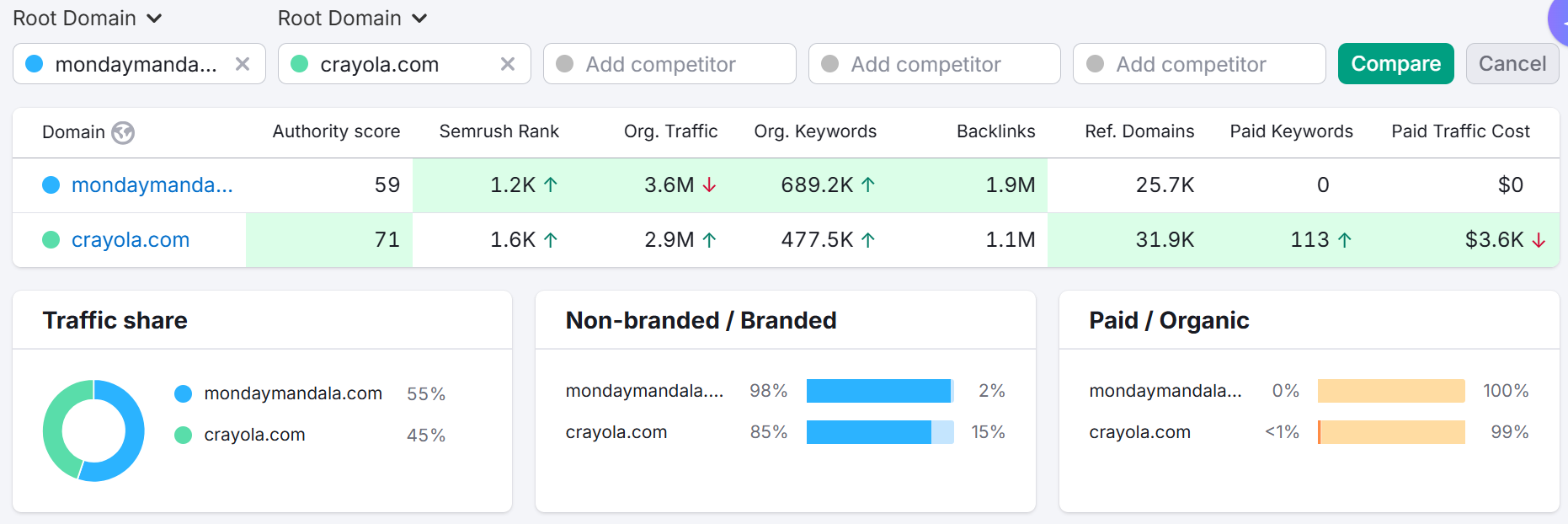
Google still rewards usefulness, and honestly, that is a good thing. Nobody is going bankrupt because they downloaded coloring pages from the “wrong” website.
But here is where things start to shift.
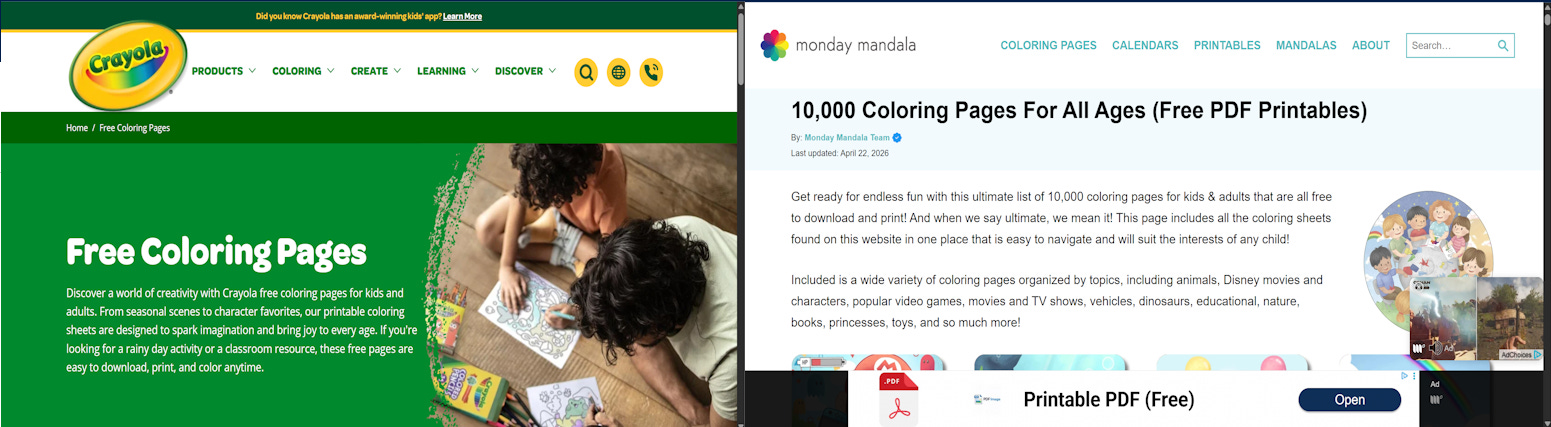
If I asked 10 people to name a crayon company, how many would say “Crayola”? If I asked those same ten people to name a coloring-page website, how many would say Monday Mandala?
Monday Mandala won clicks.
Crayola won memory.
And in a world of AI results, recommendations, and answer engines, recognition starts to matter again because traffic gets clicks, but branding compounds and extends well beyond a SERP change or algorithm update.
Search Fragmented. Brand Didn’t.
Search used to be simple.
Someone had a question, opened Google, clicked a result, and landed on your website. Success was largely measured by clicks, traffic, and actions users completed once on the site.
Many people, including business owners, think they are entitled to “free clicks”. Wake up, Google doesn’t owe you 💩.
The world of building a business off search traffic still exists (I mean, look at MM above), but it is no longer the only game in town. It is also a bigger risk today to rely on search traffic than it ever was in the past.
Today, answers happen everywhere. Google AI Overviews, ChatGPT, Perplexity, Reddit threads, Slack and Teams conversations, LinkedIn posts, YouTube videos… users no longer search exclusively within Google’s ecosystem. Traditional search is now just one piece of a much larger answer ecosystem.
So what survives when users never click?
Brand memory.
People remember names they have seen before. They remember positive experiences, friends’ recommendations, repeated exposure, and trusted companies.
Nobody remembers your title tag. (Ooof… that one hurt me a little, too.)
This is exactly why the brand suddenly feels like the answer to every executive question about SEO, AI, video, etc. When users search for answers across platforms, what travels with them is not your website.
It is your reputation.
Not domain authority. Not inbound links. Not keyword density. Not a note from your mom saying you’re a good kid, I mean…and not your Reddit karma score.
YBYS = Your Brand = Your SEO
Let’s be clear. Tactics still work
I even shared my specific “tactic” that helped drive 1M+ organic sessions.
Proof that you can rank pages, gain traffic, and ride algorithm shifts to capture massive spikes in visibility. Some businesses will continue to grow primarily through search traffic for years to come, but…
Many of these “wins” will be temporary.
Rankings move. Algorithms change. Search platforms evolve. (Sound familiar, anyone?)
Brands stay in the conversation.
YBYS is not anti-SEO. It is the evolution of SEO.
Visibility still matters because people need to find you. Recognition matters because they need to remember you after they leave. Trust matters because recommendations and reputation increasingly influence buying decisions. Proof matters because people want validation beyond your own marketing claims.
Finally, there is brand presence.
Do you exist outside your website?
Newsletters, LinkedIn, PR, podcasts, communities, reviews, mentions, and brand searches are no longer “nice to haves to appease the bots.”
These are signals that users, search engines, and AI systems use to understand who deserves attention.
Your homepage is no longer your brand. It’s just one piece of evidence supporting it.
Nick’s Weekly “This Doesn’t Suck” List
A short list of things I either rely on in my SEO consulting work or that genuinely stood out to me this week. No affiliate links, no hidden angles, and absolutely no way to buy your way onto this list. If it’s here, it earned it.


The Uncomfortable Truth
After posting about a tool I like on LinkedIn, someone reached out, surprised I would support it. The company was getting blowback over programmatic SEO, and there were rumors that some larger brands using it tactically had been penalized by Google.
My response was simple:
People kill people with Teslas, too.
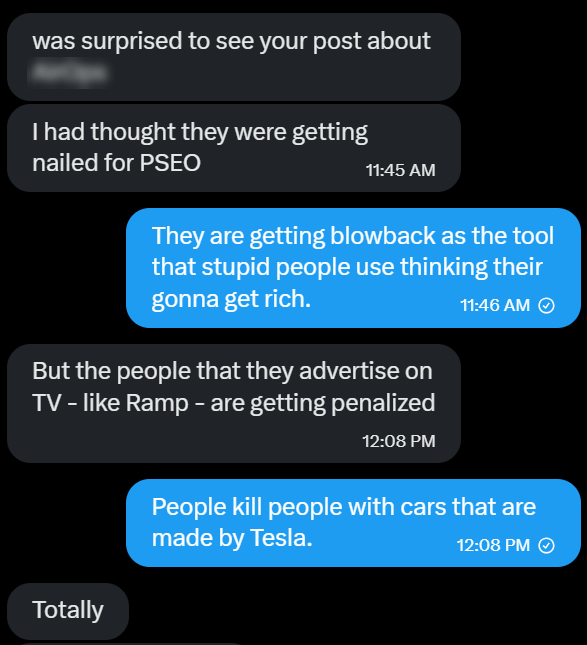
Tools are not the problem.
People can use AI to create junk. They can use SEO to manipulate rankings. They can manufacture links, game prompts, and chase short-term visibility spikes. (hello listicles!)
Some of it will even work. For a while…
But every year, the shelf life of these tactics gets shorter.
Google demands trust/authority. AI asks for memory. Consumers ask for proof.
The companies that win in the long term are not the ones finding the next loophole. They are the ones people remember.
YBYS.
Your Brand = Your SEO.
Anyone can rank. Not everyone gets remembered.
~Nick

North Star Inbound runs an integrated growth system:
Strategic SEO and GEO
Digital PR
Conversion copywriting
Case study proof: our top 5 posts drove 144712 sessions in a 9-post pilot and led the blog for conversions, including 224 conversions and 217 phone calls from one post.