

Thanks to this week’s sponsors: Profound and North Star Inbound
Congratulations. You’ve officially ranked yourself as the #1 most awesome person on planet Earth.
But let’s be honest, you’re not fooling anyone. It’s painfully obvious what’s happening. These self-serving listicles aren’t about helping users; they’re about feeding LLMs just enough signal to start repeating your name across answers for anything remotely relevant.
And look, it works… at least for now. If enough content says the same thing, it starts to resemble consensus, even when it’s manufactured.
The problem is, none of that builds trust.
This week is about listicles. Most are garbage. The earned ones build real credibility and stand the test of time. I’ll show you some examples.
Thank you to this week’s #SEOForLunch sponsor: Profound

Take Profound's Free Course on Marketing Engineering
Every brand on the planet will soon need a marketing engineer to build the agents, automations, and systems that create a new kind of marketing—part builder, part strategist.
Profound’s course is 100% free and platform agnostic. You don’t need to be a customer to do it.
Everyone’s Focused on the Wrong Thing
Most of the conversation right now is focused on spam, self-ranking, and obvious manipulation. And while that deserves attention, stopping there misses the bigger point entirely. The real issue isn’t listicles themselves, it’s how they’re being used and who actually earns a place on them.
Listicles aren’t the problem. Unearned inclusion is.
A Dose of Reality
There are really only two types of listicles.
The first is self-ranked. You wrote it, you control it, and you benefit from it. You decide where you show up, who you’re compared against, and how the story is told. There’s no real downside to putting yourself at the top, which is exactly why so many do. (although I do debate this with Ross Hudgens over at the Siege Media podcast)
The second is earned. You didn’t create it, you don’t control it, and you don’t get to shape the narrative. You’re included because someone else decided you belong there, usually alongside other credible names.
That difference matters more than anything else.
Anyone can rank themselves. Not everyone gets picked.
Listicle You Can’t Buy: Moz
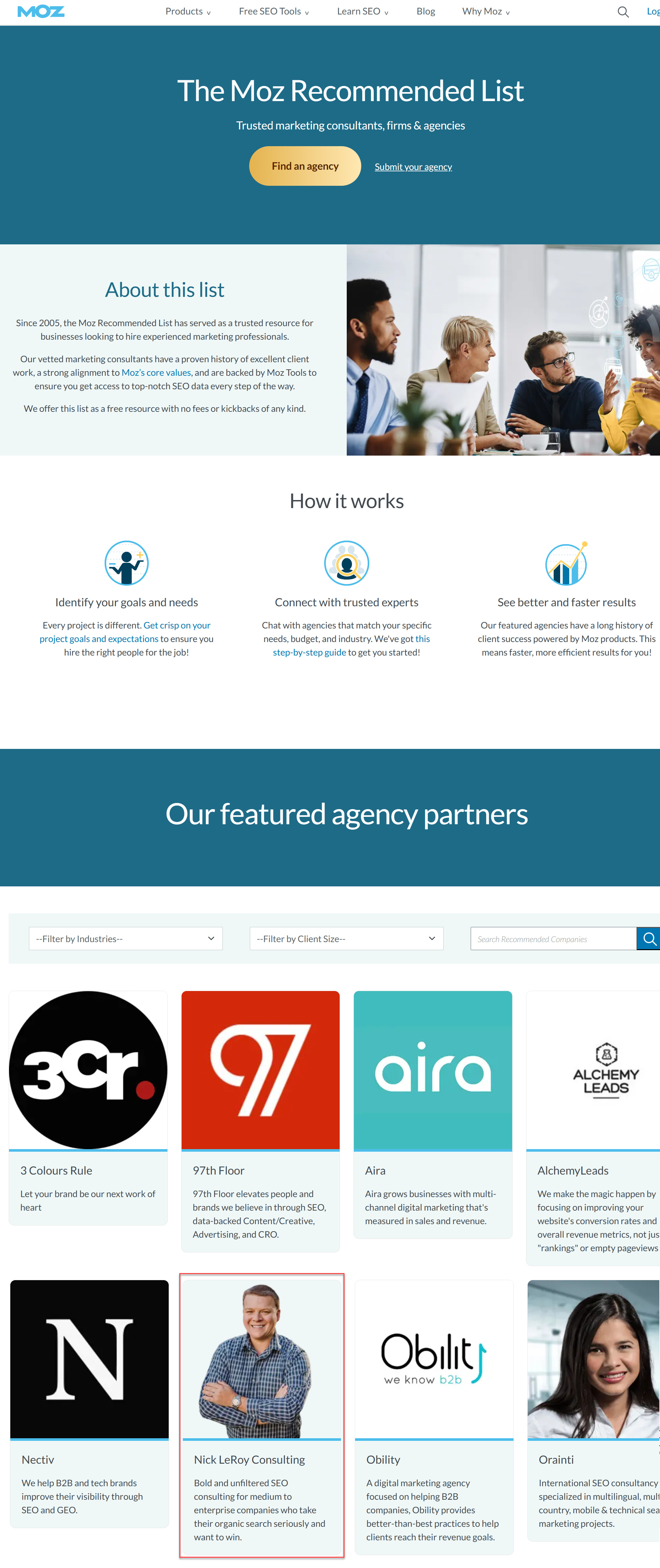
One fantastic example of an earned “list” is Moz's recommended list.
This isn’t some throwaway “top tools” post built to rank/manipulate AI. It’s a list that’s been around for over a decade, carefully curated and rarely updated. When changes do happen, they’re intentional. That alone tells you everything about how seriously it’s treated.
It’s also not just about the list itself, it’s who’s on it. You’re looking at names that have put in the time, built credibility, and are recognized by the industry. Being included alongside these names demonstrates credibility and industry trust.
This isn’t listicle hacking; it’s reputation being put on full display.
Note: the image has been modified to make it more concise and to display a proper example. Original and full source is available at Moz.com
Listicle You Can’t Buy 2: Profound
The second example came from Profound, and it reinforces the same pattern in a completely different context.
This one is newer and more tied to the AI conversation, but this and the Moz list provide similar trust signals. It wasn’t built to rank for “best X tools” or to push Profound itself as the answer to the “who’s the top AI tool in 2026” LLM prompt. It was created to highlight credible players in a new space that’s getting noisy fast. Different audience, different intent, same underlying signal.
Again, I didn’t ask to be included. I didn’t pay for placement. I didn’t get to influence how I was positioned or who I was listed next to. I showed up because someone else made that call.
This isn’t a tactic. It’s a byproduct of hard work, not skipping corners, and driving results.
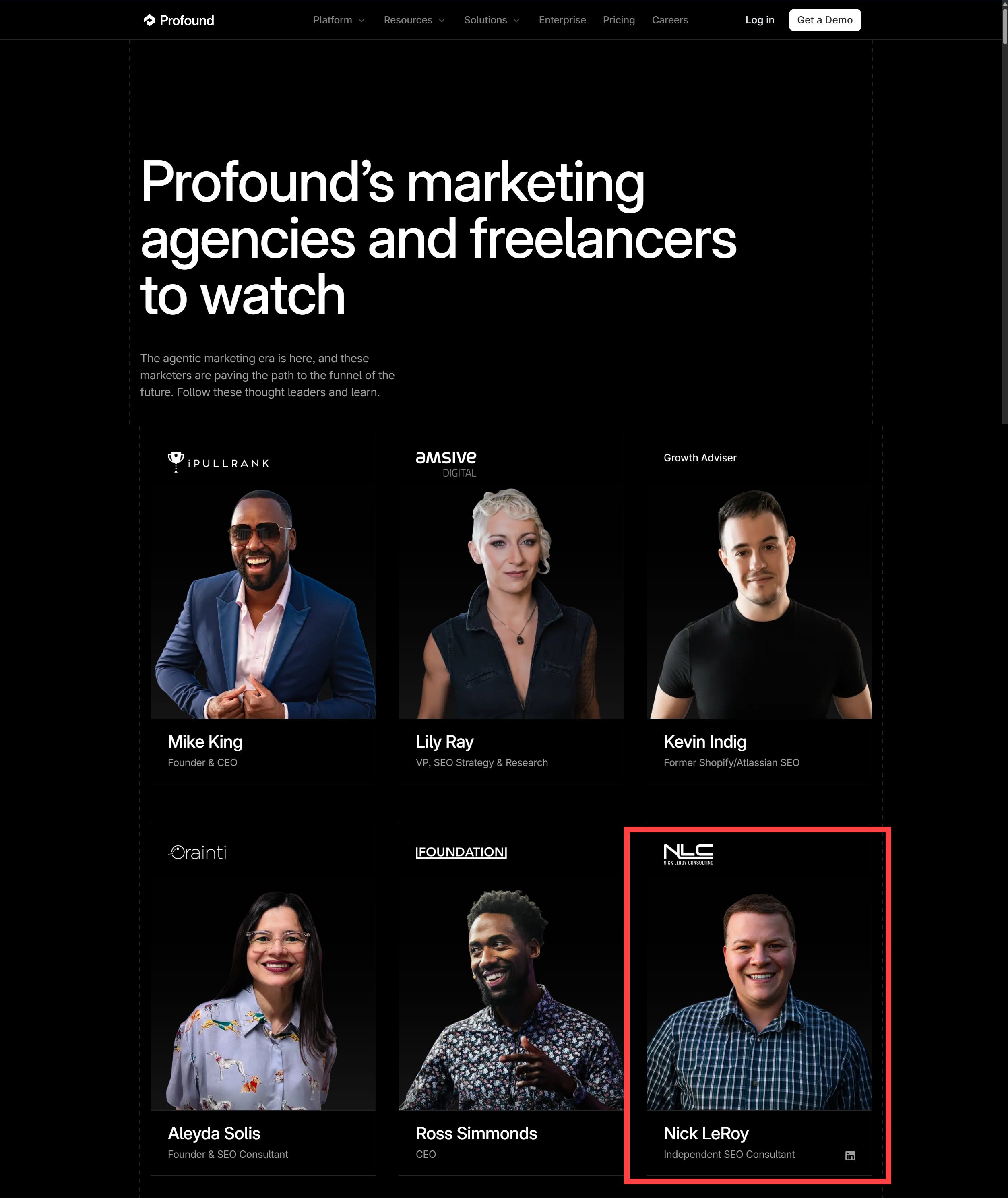
Note: Again, this image has been lightly modified to make it more concise and to display a proper example. Original and full source is available at profound.com
This is where it actually matters.
Third-party validation will always carry more weight than anything you say about yourself. These are the mentions that show up when decisions are being made, dropped into Slack threads, added to shortlists, and passed around in internal decks. You’re not in the room, but your name is.
That’s what makes it powerful.
And it’s also why it connects directly to AI. LLMs don’t determine credibility; they surface patterns. Earned mentions create consistent signals across sources. Self-made lists are isolated. One builds momentum, the other just makes noise.
This is trust at scale, without you in the room. AI reflects it. It doesn’t create it.
Nick’s Weekly “This Doesn’t Suck” List
A short list of things that stood out to me this past week. No affiliate links, no hidden angle, and certainly no way to buy your way in. If it’s here, it's because it was earned!


Write Your Own List… Or Earn Inclusion?
Stop worrying about where you rank on your own list. (Don’t you love those who create their own lists and then rank themselves #3, ha!)
Start focusing on where you show up when someone else is making the call.
You can fake “top rank”. You can’t fake being recommended.
~Nick
Thanks to North Star Inbound For Also Sponsoring This week’s Newsletter
Turn Your Blog Into Your Biggest Sales Engine
Brought to you by North Star Inbound–the sales enablement SEO agency.
How? Focus on high-impact SEO strategies that target the most profitable opportunities.
North Star Inbound has a proven track record of creating top-converting blog pages that deliver thousands of leads
hundreds of thousands in directly-attributed revenue
and rapid payback periods on SEO spend.
They focus on the 10% of pages with the highest ROI for your brand. Basically, your content becomes your most effective sales tool.
There’s no better way to loosen tight budgets than to grow revenue quickly.
Intrigued?
